
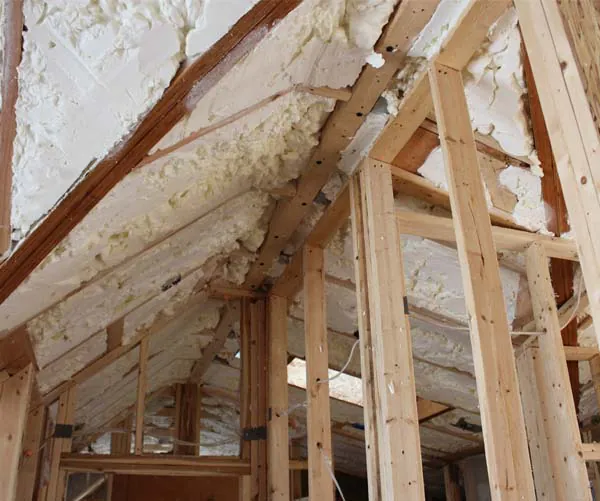
Homes from Manassas to Winchester often have similar insulation plans. Because they’re in the same region, things like attic depth and air-sealing scope can carry over from one market to the other, sometimes without a load calculation to back the decision. Still, many people think the Shenandoah Valley needs extra insulation because it’s assumed to be colder.
The design numbers tell a more complicated story. When comparing Winchester vs Northern Virginia insulation, Winchester and Fairfax both fall in Climate Zone 4A, and their county-level winter design temperatures differ by about one degree. The bigger differences come down to the house—how much air it leaks, how exposed it is, and what the load calculation reveals.
The climate zone sets the floor, not the complete insulation plan. Considering insulation and air sealing together gives a more complete picture of what a house needs. Homeowners and builders should assess each project based on its own numbers.
Winchester vs. Northern Virginia Insulation: Same Climate Zone, Different Design Conditions
Both markets are Climate Zone 4A
Frederick County/Winchester and Fairfax County are within Climate Zone 4A. The climate zone guide uses zones by county, not just cities or states, to assign zones. It also reflects county reassignments made under the 2021 IECC.
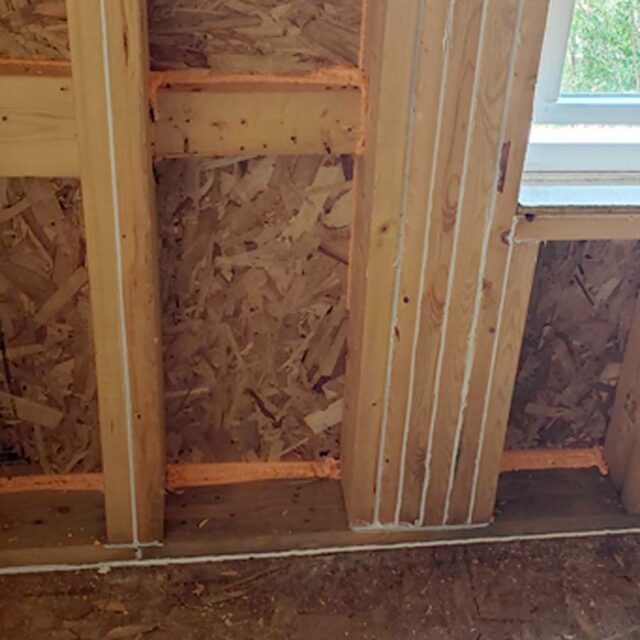
When builders work across jurisdictions, checking by county is important. For Shenandoah Valley home insulation, always confirm the zone by county. A home in Western Virginia alone doesn’t determine the zone.
The same applies to Climate Zone 4A insulation in Virginia. The designation sets the baseline, but the individual property helps shape the final design.
The design temperatures are closer than people assume
This may be surprising.
Fairfax County has a 1% cooling design temperature of 94°F and a 99% heating design temperature of 14°F, with an HDD/CDD ratio of 1.6. Frederick County and Winchester City come in at 93°F for cooling and 15°F for heating, with an HDD/CDD ratio of 1.4, according to the published county design-temperature table.
The Fairfax County design temperature is much closer to Winchester’s than many people might expect. Comparing the heating design temperatures in Virginia for these two areas shows the listed winter values differ by just one degree.
What a 99% heating design temperature is
A 99% heating design temperature is an outdoor winter value used when calculating a home’s heating load. The county figures draw from ASHRAE 2017 Handbook of Fundamentals and Manual J 8th Edition design conditions.
The listed values come from weather stations in the county or, if needed, within a 40-mile radius. Winchester’s listed value reflects regional conditions. Individual valley-floor properties, exposed ridges, and rural lots may experience different conditions.
The county table sets the limit. The site still shapes the design.
What Actually Changes Across the Footprint (And What Doesn’t)
What doesn’t change: the code floor
Since both markets are in the same climate zone, they start with the same basic prescriptive minimum.
Builders need to confirm the adopted code edition and required values with the local building official since jurisdictions across Virginia, Maryland, D.C., and West Virginia may have different requirements.
An insulation spec in Frederick County, VA starts with the applicable code floor. The house and site determine what comes next.
What does change: the site
As you drive from an inner Fairfax suburb toward the Shenandoah Valley, the conditions around a house can change significantly. Tree cover, elevation, ridge and wind exposure, and clear-night radiative cooling can vary from site to the next.
These differences affect load calculation and air leakage results. The climate-zone designation alone can’t account for conditions at the individual house and site. Even two houses built from the same floor plan may perform differently once they’re placed on different properties.
What changes most: air leakage
Air leakage is the biggest variable between identical floor plans in the two markets. Gaps around top plates, penetrations, chases, hatches, and other transitions let conditioned air escape. The number of openings a house has, and how well they’re sealed, can change its performance considerably.
Insulation can’t address the gaps where conditioned air escapes. That’s why air sealing in Northern Virginia and Winchester should reflect what’s happening in each house.
Adding appropriate insulation can provide average savings of 15% on electricity bills. That figure applies to insulation alone. Air sealing serves a different purpose by controlling leakage and improving comfort. A tighter, better-insulated envelope can also help manage humidity and control mold risk in crawl spaces.
How to Spec the Envelope in Either Market
Step one: air seal before you add R-value
When you add more insulation over an unsealed attic plane, it may not perform as it should if leakage paths remain.
Top-plate penetrations, open chases, recessed cans, and attic hatches are common trouble spots in both markets. Address these areas before adding more insulation. The sequence matters more than thickness. Start by sealing any leaks, then add insulation.
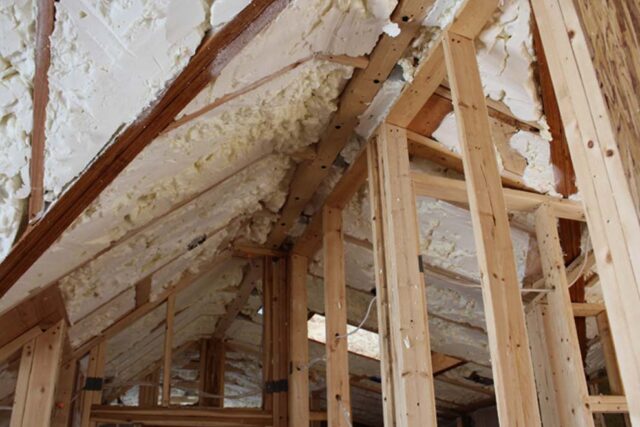 Step two: treat the attic as a continuous plane
Whether the job involves attic insulation in Winchester, VA, or an attic in Fairfax, insulation needs to cover the space consistently. Thin areas and gaps can compromise installation. Depth markers help verify that you installed the intended amount evenly. Consistency is more important than the material brand.
The best attic insulation methods for Virginia homes vary with the assembly, but consistent coverage matters regardless of material. The same principle applies when adding or replacing attic insulation in an existing house.
Step three: don’t forget the bottom of the house
People tend to focus on the attic, but comfort issues can start lower in the house. Drafts and uneven temperatures often come from rim joists, crawl space walls, and basement band areas, especially in homes more exposed in the Valley. Crawl spaces also need moisture management as part of the overall assembly.
 Step four: choose materials for the assembly
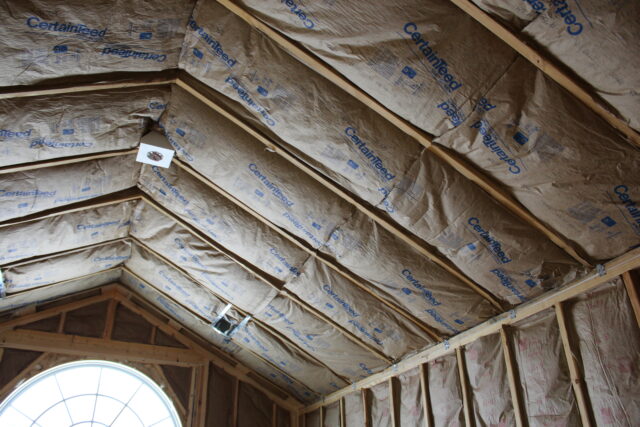
Fiberglass, cellulose, mineral wool, rigid board, and spray foam each solve different assembly problems. The assembly should guide the material choice.
Homeowners weighing their options can also look at our fiberglass guide when comparing approaches. Builders should ask what went into the load calculation, including the heating design temperature used. Homeowners can ask a simpler version of the same question: What changes between one end of the region and the other for my specific house?
FAQ
Is Winchester in a colder climate zone than Fairfax?
No. Frederick County/Winchester and Fairfax County are both in Climate Zone 4A. Differences in site conditions, elevation, wind exposure, and air leakage can make a Winchester home feel colder even though the climate zone is the same.
What is a 99% heating design temperature?
It’s an outdoor winter design value used in heating-load calculations, drawn from the ASHRAE 2017 Handbook of Fundamentals and Manual J 8th Edition design conditions. The listed value for Fairfax County is 14°F. For Frederick County/Winchester, it’s 15°F.
Do Shenandoah Valley homes need more attic insulation than Fairfax homes?
No, not always. Both areas use the same climate-zone minimum, but what a home needs depends on a load calculation and leakage test.
Why does my Winchester home feel colder than my old Fairfax home if the zone is the same?
Air leakage, site exposure, wind, elevation, and assembly details can all affect how a home feels, even when the climate zone is the same.
Does spray foam make sense in Climate Zone 4A?
It can. Spray foam insulation provides insulation and air sealing in one step. Its suitability depends on the assembly.
Winchester and Fairfax share a climate zone and have nearly identical county design temperatures. The houses themselves can still differ greatly.
That’s why the insulation spec should come from the load calculation, leakage results, and the property’s condition. For homeowners and builders across the Manassas service area and the Winchester insulation services area, including Clear Brook, Southland Insulators can look at the home or project on its own terms.
Request an assessment for your home or project.
References
Gilbride, Theresa L., et al. “Guide to Determining Climate Zone by County: Building America and IECC 2021 Updates.” Building America Solution Center, Pacific Northwest National Laboratory, Sept. 2022, basc.pnnl.gov/library/guide-determining-climate-zone-county-building-america-and-iecc-2021-updates.
United States Environmental Protection Agency. “Design Temperature Limit Reference Guide (2019 Edition): ENERGY STAR Certified Homes, Version 3/3.1.” ENERGY STAR, 1 Nov. 2019, www.energystar.gov/sites/default/files/asset/document/Design%20Temperature%20Limit%20Reference%20Guide%20(2019%20Ed)%20-%20ENERGY%20STAR%20Certified%20Homes_Rev10.pdf.
Vermeer, Trenton. “Energy Savings by Insulation.” ASU Energy Efficiency Center, Arizona State University, 11 July 2023, eec.asu.edu/2023/07/11/energy-savings-by-insulation/.