
For Northern Virginia homeowners, improving home energy efficiency is one of the smartest long-term upgrades you can make. Better efficiency means lower utility bills, more consistent comfort, and a home that handles both hot summers and chilly winters without working overtime. It also cuts your environmental footprint without sacrificing convenience.
 Northern Virginia’s climate is a big reason efficiency matters. Summers are humid and demand heavy cooling. Winters are damp and cold, pushing heating systems to the limit. According to the U.S. Energy Information Administration, heating and cooling account for nearly half of a typical Virginia household’s energy use. That means improving the systems and structures that control heat flow delivers some of the biggest payoffs.
With modern building science and home technology, efficiency upgrades are more accessible than ever. A great starting point is a professional home energy audit. An audit assesses how your home uses and loses energy, identifies the biggest problem areas, and provides a targeted plan for smart improvements. Fairfax County recommends audits as one of the most effective first steps toward lowering bills month after month.
Once you know where your home is leaking energy, this guide will cover what three upgrades offer the strongest and most reliable returns and how Southland Insulators can make your home as energy-efficient as possible.
1. Seal Air Leaks in the Home’s Envelope
Why It Matters
is one of the most important upgrades for improving efficiency. It involves finding and sealing gaps, cracks, and openings in a building envelope, the area of your home that separates the indoors from the outdoors. Even small leaks force your heating and cooling systems work harder, as conditioned air leaks out while outdoor air sneaks in. Sealing air leaks is often the first place to start when boosting home energy performance. When done properly, it can reduce total energy use by up to 20 percent.
Common Leakage Points
Even well-built homes have weak spots. The most common leak locations include:
- Places where the foundation meets exterior walls or siding
- Attic spaces, especially around the attic hatch or gaps near insulation
- Window and door frames
- Baseboards and trim where walls meet floors
- Penetrations for utilities, such as plumbing pipes, wiring, cable lines, dryer vents, and electrical or gas service entrances
- Openings around recessed lights or ceiling fixtures
Leaks occur anywhere two building materials meet or where holes were cut for something to be installed through a wall or ceiling. Homeowners can spot some leaks with simple tools, such as an incense stick, or by feeling for drafts. A professional energy auditor can also conduct a blower door test or use a thermal camera to pinpoint hidden openings.
Sealing Methods and Materials
Different gaps need different sealing methods: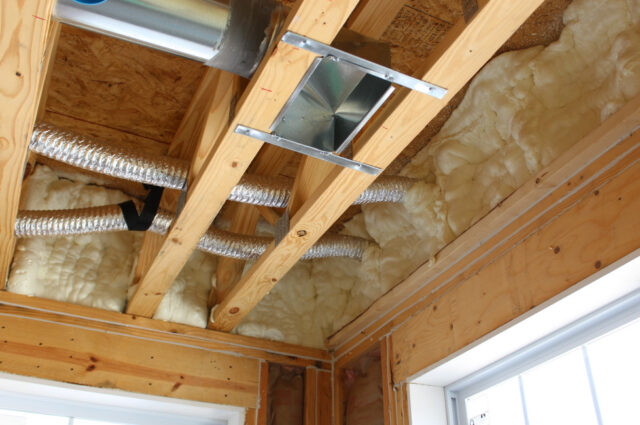
- Caulk handles small stationary cracks (one-quarter inch or smaller) around siding, trim, or utility penetrations. It stops air and water infiltration.
- Weatherstripping works on movable components, such as exterior doors and operable windows. Options include foam, vinyl, and metal strips.
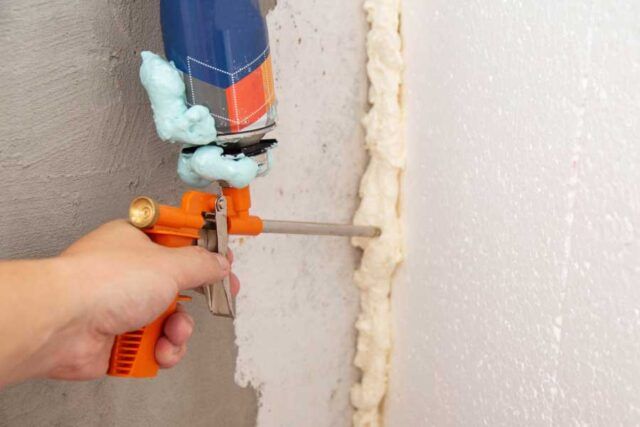
- Spray foam or rigid foam boards are ideal for larger gaps in unfinished areas, such as attics or rim joists.
When considering sealing leaks in your home, don’t forget the ductwork. Leaky ducts are one of the biggest sources of wasted conditioned air. When ducts leak into attics or crawlspaces, heated or cooled air never reaches your living areas. Even worse, supply leaks can pull in hot, humid, or dusty outdoor air to balance pressure, creating unnecessary strain.
Sealing ducts with mastic or metal tape and adding insulation around ducts in unconditioned spaces keeps more conditioned air where it belongs. This improves comfort, reduces energy waste, and protects your HVAC system from overworking.
Ventilation
A well-sealed home still needs fresh air. Without proper ventilation, contaminants and moisture can accumulate. Fairfax County warns that overly tight homes can trap pollutants or humidity if ventilation isn’t managed. Balanced airflow ensures a healthy indoor environment while still keeping energy use in check.
A side benefit of air sealing is better indoor air quality: sealing up gaps keeps out dust, pollen, pests, and outdoor humidity.
If you’re unsure where to start in assessing your home’s air sealing needs, contact our professionals at Southland Insulators for guidance.
2. Increase and Improve Your Home’s Insulation
Understanding Insulation
Once leaks are sealed, insulation becomes the next major upgrade. Insulation slows the movement of heat through the building envelope, measured by something called an R-value. A higher R-value means better resistance to heat flow. The Department of Energy explains that good insulation keeps homes warmer in winter, cooler in summer, and more energy efficient year-round.
The EPA estimates that roughly 9 out of 10 U.S. homes lack adequate insulation. Older Northern Virginia homes often lack adequate insulation in exterior walls, attics, crawl space floors, or rim joists. Even newer homes sometimes fall short on recommended levels.
When combined with proper air sealing, insulation upgrades can reduce heating and cooling costs by around 15 percent and cut total energy use by roughly 11 percent.
How Insulation Works
Heat naturally moves from warm areas to cooler areas until temperatures equalize. In winter, heated indoor air tries to escape to unheated attics, garages, or the outdoors. In summer, outdoor heat flows inward unless there’s a strong thermal barrier. Insulation acts like a thermal blanket, slowing those changes and stabilizing indoor temperatures.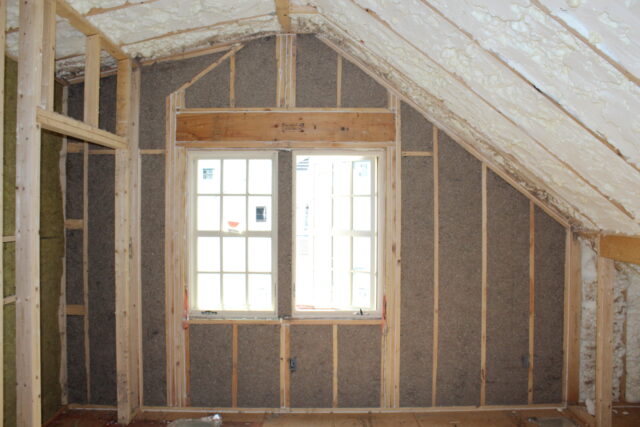
To create a continuous insulated envelope, focus on:
- Attics: The top priority. Most Northern Virginia homes should have R-38 to R-60 insulation, typically equivalent to 12 to 18 inches of loose-fill fiberglass or cellulose. If you can see your ceiling joists, you likely need more.
- Exterior walls: Many older homes lack insulation entirely. Blown-in cellulose or fiberglass can be installed with minimal disruption.
- Floors over crawlspaces or garages: These areas often contribute to cold floors and drafts.
- Basement walls and rim joists: These are significant sources of heat loss and humidity infiltration.
Remember, air seal first, then insulate. Air leaks undermine insulation. If gaps remain, air can bypass the insulation, reducing its effectiveness. Sealing first ensures insulation performs as intended.
Besides those already mentioned, Insulation also provides the benefits of:
- More even temperatures throughout the home and fewer cold drafts
- Less outside noise
- Improved indoor air quality by reducing dust movement
- Superior humidity control in Virginia’s muggy summers
- A one-time improvement that delivers permanent energy savings
3. Upgrade to Smart Home Technology and Efficient Equipment
Modern smart technology makes it easier to reduce and manage home energy use. These tools don’t replace proper insulation or sealing, but they add efficiency and convenience to a strong building envelope. Many of these tools are simple changes that carry a significant impact.
Smart Thermostats
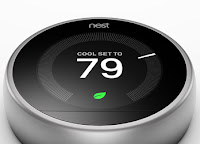
Heating and cooling are the most significant portion of home energy bills. Programmable and smart thermostats help manage those costs by automatically adjusting temperatures. Smart models can:
- Learn your routine
- Adjust temperatures based on occupancy
- Allow remote control through apps
- Provide energy reports and maintenance alerts
Smart thermostats aren’t just smart for your home, they’re smart for your wallet. Lowering your heat can save you 1-3% on each heating bill for every degree dialed down. Adjusting your thermostat by 7 to 10 degrees for at least 8 hours each day can reduce HVAC energy use by up to 10%.
Energy Efficient Lighting and Appliances
LED bulbs use a fraction of the energy of incandescent lighting and last much longer. This has a significant impact, as lighting accounts for about 15% of the average home’s energy bill. For appliances, ENERGY STAR-certified refrigerators, washers, and dishwashers reduce electricity use while delivering the same performance. A new Energy Star refrigerator, for example, uses 15% less energy than the minimum standard and costs only around. $50/year to run. An energy-efficient washer saves over $350 in energy costs over its lifetime. Many homeowners also see long-term savings from upgrading HVAC systems to high-efficiency models, such as heat pumps or variable-speed furnaces.
Smart Controls
Additional smart tools can cut waste automatically:
- Smart plugs and lighting systems: Control lights with timers or apps
- Motion sensors: Shut lights off when not needed
- Smart power strips: Eliminate “vampire loads” from plugged-in electronics, aka electronics that continue to draw power even when off or idle
- Whole-house electricity monitors: Help identify unusually high-use appliances
These tools operate quietly in the background while improving comfort and reducing unnecessary electricity use.
Improving Your Home’s Efficiency Comes Down to Three High-Impact Steps:
Sealing air leaks, upgrading insulation, and adding smart technology where it counts. Together, these changes lower monthly energy bills, make your indoor spaces more comfortable, and shrink your home’s carbon footprint.
With Northern Virginia’s climate swinging from freezing January nights to humid July afternoons, these upgrades help your home stay stable and efficient instead of letting energy slip through cracks and thin insulation.
If you’re ready to determine the best next steps for your home, Southland Insulators specializes in professional air-sealing and insulation solutions that make a measurable difference. Contact us today to get expert guidance and start moving toward a more energy-smart home!
References:
Energy Information Administration. (2009). Virginia: State energy consumption, price, and expenditure estimates. U.S. Department of Energy. https://www.eia.gov/consumption/residential/reports/2009/state_briefs/pdf/va.pdf#:~:text=CONSUMPTION%20BY%20END%20USE%20While,other%20parts%20of%20the%20country
Fairfax County Government. (n.d.). Home energy. Fairfax County Department of Environment and Energy Coordination. https://www.fairfaxcounty.gov/environment-energy-coordination/home-energy#:~:text=Ready%20to%20take%20it%20a,utility%20bills%20month%20after%20month
Fairfax County Government. (n.d.). Seal air leaks in your home as the weather turns colder. Fairfax County Department of Environment and Energy Coordination. https://www.fairfaxcounty.gov/environment-energy-coordination/seal-air-leaks-home-weather-turns-colder#:~:text=When%20you%20properly%20seal%20air,that%20may%20affect%20your%20household
Fairfax County Government. (n.d.). Take the two degree challenge to save energy and money this season. Fairfax County Department of Environment and Energy Coordination. https://www.fairfaxcounty.gov/environment-energy-coordination/news-and-events/take-two-degree-challenge-save-energy-and-money-season#:~:text=Going%20by%20DOE%E2%80%99s%20estimates%2C%20you,at%20work%20or%20at%20bedtime
HUD User. (n.d.). Insulation and air sealing. U.S. Department of Housing and Urban Development. https://archives.huduser.gov/portal/consumer/insulation_air_sealing.html#:~:text=Sealing%20gaps%20and%20openings%20in,air%20leaks%20difficult%20to%20access
U.S. Department of Energy. (n.d.). Insulation. Office of Energy Efficiency & Renewable Energy. https://www.energy.gov/energysaver/insulation#:~:text=Insulation%20in%20your%20home%20provides,costs%2C%20but%20also%20improves%20comfort
U.S. Environmental Protection Agency. (n.d.). Smart thermostats. ENERGY STAR. https://www.energystar.gov/products/smart_thermostats
U.S. Environmental Protection Agency. (n.d.). Why seal and insulate? ENERGY STAR. https://www.energystar.gov/saveathome/seal_insulate/why-seal-and-insulate
Virginia Cooperative Extension. (n.d.). Energy efficiency in the home (Publication BSE-312). Virginia Polytechnic Institute and State University. https://www.pubs.ext.vt.edu/content/dam/pubs_ext_vt_edu/2908/2908-9025/BSE-312.pdf
Virginia Energy Sense. (n.d.). About Virginia energy. https://www.virginiaenergysense.org/energy-101/about-va-energy/#:~:text=about%2020,increasing%20because%20of%20advanced%20computer