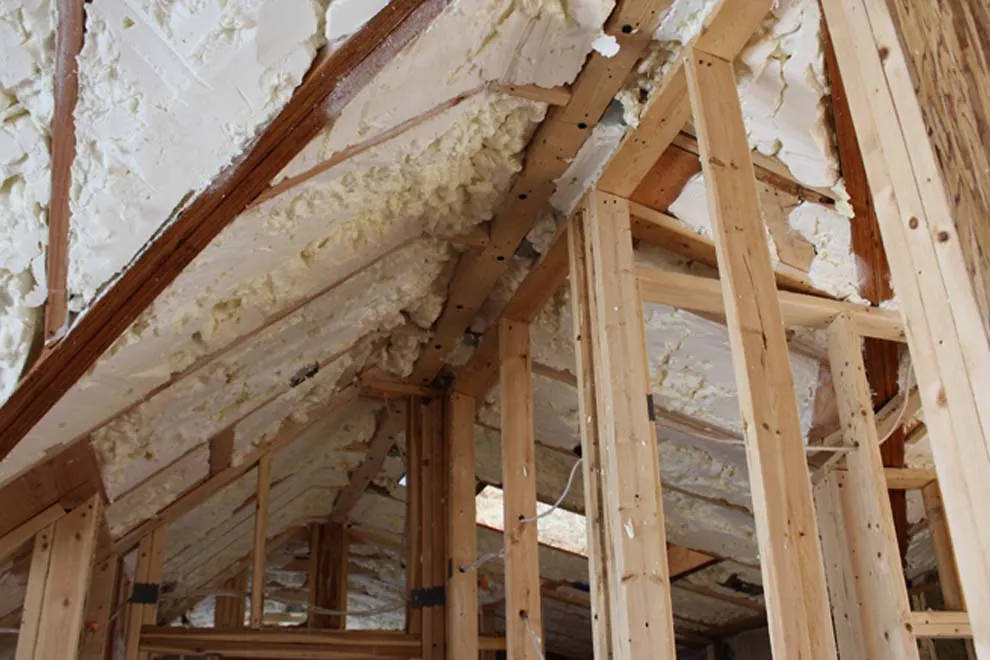
Most homeowners don’t realize that their attic is the single biggest source of energy loss in the home. In fact, the U.S. Department of Energy notes that attic air leaks represent one of the greatest opportunities to improve efficiency and reduce energy waste.
In Virginia’s mixed-humid climate, an underinsulated attic can lead to soaring summer cooling costs, winter cold drafts, moisture issues, and HVAC systems working overtime. The EPA estimates that proper insulation and air sealing attic improvements can reduce heating and cooling costs by an average of 15%.
The good news is that there are proven solutions. The three best attic insulation methods Virginia homeowners should consider are blown-in fiberglass insulation, blown-in fiberglass combined with air sealing, and spray foam insulation. The right choice depends on your home’s condition, your budget, and your energy efficiency goals. In most cases, Virginia homes in IECC Climate Zone 4 require a minimum attic insulation R-value of R-49 to meet current code.
Not sure which method is right for your home? A professional assessment can pinpoint where your attic is losing energy and recommend the best solution.
Why Your Attic Is the Most Important Place to Insulate
Stack Effect and Attic Energy Loss
Warm air naturally rises through your home and escapes through the attic, a process known as stack effect. As air moves upward, it carries conditioned air out of your living space and pulls unconditioned air in from lower levels.
This is why attic air leaks are such a major problem. Gaps around wiring, plumbing, recessed lighting, and ductwork allow air to escape continuously. According to the DOE’s Building America program, sealing these leaks is one of the most impactful upgrades you can make for energy efficiency attic performance.
ENERGY STAR also emphasizes that sealing and insulating are among the most cost-effective ways to improve comfort and reduce energy use.
Virginia’s Climate and Code Requirements
Most of Virginia falls within IECC Climate Zone 4, which includes hot, humid summers and cold winters. This puts constant demand on your home’s insulation system year-round.
Under the current Virginia energy code insulation requirements, homes must have a minimum attic insulation R-value of R-49. If your attic insulation is below R-30 (roughly 10–13 inches), the DOE recommends upgrading to improve performance.
Three Proven Attic Insulation Methods Compared
Option 1: Blown-in fiberglass insulation
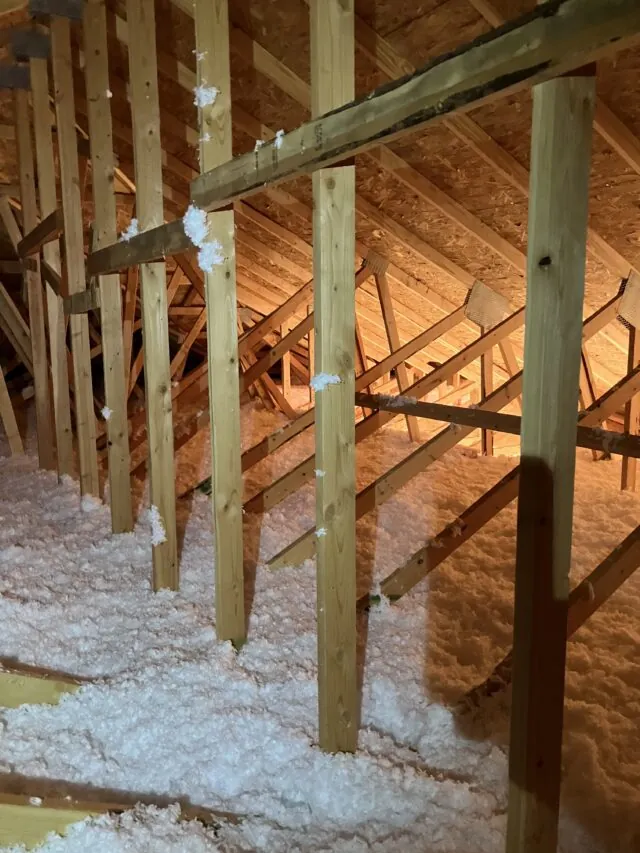 Blown-in fiberglass insulation is one of the most common and cost-effective ways to improve attic insulation Virginia homes. It involves installing loose-fill fiberglass across the attic floor, creating an even layer that fills gaps and covers joists.
Best for:
- Homes with existing insulation that needs a boost
- Homeowners seeking an affordable attic insulation upgrade
- Improving R-value quickly
Limitations:
- Does not address attic air leaks
- Air can still move through gaps around wiring, plumbing, and HVAC penetrations
- Limited impact on overall energy efficiency performance without air sealing
Option 2: Blown-in fiberglass Insulation with Air Sealing
This approach combines blown-in fiberglass insulation with comprehensive attic air sealing to address both thermal resistance and air leakage.
In existing homes, old insulation is removed, and penetration points are sealed with caulk or foam. Freshly blown-in fiberglass is installed once everything is sealed. The DOE emphasizes that sealing air leaks before insulating is critical to maximizing performance. In new construction, penetration points are sealed before blown-in insulation is installed.
Best for:
- Homeowners looking to reduce energy bills
- Improving comfort and eliminating drafts
- Achieving the best cost-to-performance ratio
Benefits:
- Stops uncontrolled airflow through attic air leaks
- Significantly improves energy efficiency
- Helps insulation perform at its full rated value
For most homes, this is the most balanced and effective solution.
Option 3: Spray foam attic insulation
Spray foam attic insulation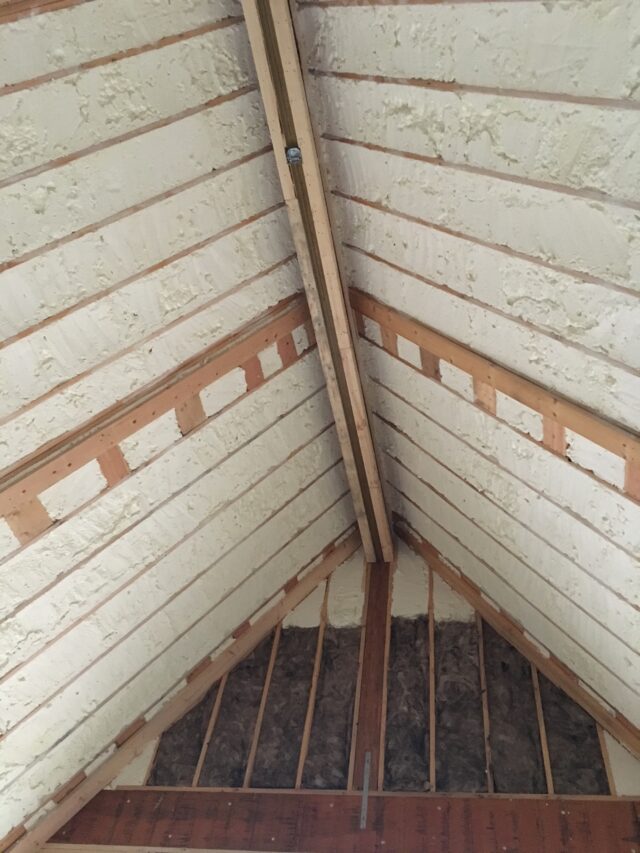 offers the highest level of performance by combining insulation and air sealing into a single system. Closed-cell spray foam is applied along the roofline, creating an unvented (conditioned) attic that brings ductwork and HVAC equipment inside the thermal envelope.
Best for:
- Homes with ductwork in the attic
- New construction or major retrofits
- Homeowners prioritizing maximum performance
Benefits:
- Eliminates attic air leaks entirely
- Provides superior thermal performance
- Improves moisture control in humid climates
The DOE notes that insulating the rafters in an existing attic encloses the air distribution system within conditioned space, reducing duct energy losses.
How to Know Which Method Is Right for Your Home
Key Factors to Consider
The best attic insulation Virginia homeowners turn to depends on several factors:
1. Existing insulation levels
If your current insulation is below R-30, it’s time for an attic insulation upgrade.
2. Presence of air leaks
Dirty or discolored insulation is a clear sign of attic air leaks. ENERGY STAR recommends sealing these leaks before adding insulation.
3. HVAC system location
If ductwork is located in an unconditioned attic, spray foam attic insulation can significantly improve efficiency, creating a conditioned attic space.
4. Budget and performance goals
- Blown-in fiberglass insulation = lowest upfront cost
- Air sealing attic + blown-in = best cost-to-performance ratio
- Spray foam attic insulation = highest performance, maximum long-term savings
Virginia-Specific Considerations
Virginia Tech Extension advises that insulation type selection should account for Virginia’s mixed-humid climate, where both heating and cooling loads are significant. Because Virginia is in IECC Climate Zone 4, insulation must perform well in both hot and cold conditions. Homes should meet a minimum attic insulation R-value of R-49, which typically requires about 15–16 inches of insulation. Both fiberglass and cellulose attic insulation can achieve this depth, but performance depends heavily on proper installation and air sealing.
When to Call a Professional
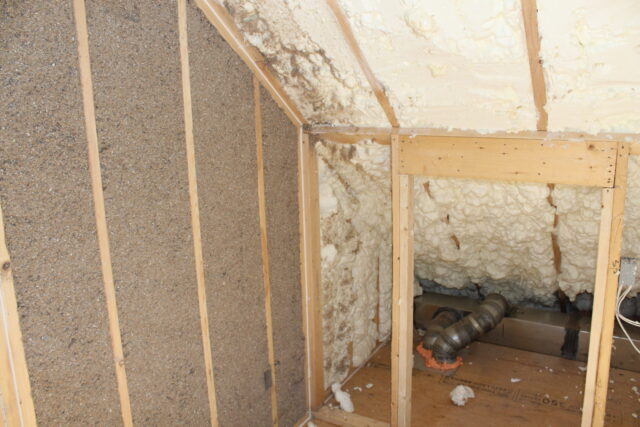 If your attic shows signs of moisture damage, mold, pest activity, or deteriorating insulation, it’s best to call a professional. ENERGY STAR recommends professional help when:
- Vents exhaust into the attic
- There are signs of pests or contamination
- Combustion appliances are present
Installing spray foam attic insulation also requires specialized equipment and trained professionals to ensure proper application and code compliance.
A professional energy assessment using blower door testing and infrared imaging can identify hidden attic air leaks that visual inspection alone cannot detect, and ensure your home meets Virginia energy code insulation requirements.
FAQ
What is the best type of insulation for an attic in Virginia?
For most homes, blown-in fiberglass insulation combined with air sealing offers the best balance of cost and performance. For maximum efficiency, spray foam attic insulation provides a complete air and thermal barrier, eliminating air leaks and protecting ductwork.
How much attic insulation do I need in Virginia?
Current Virginia energy code insulation standards require a minimum attic insulation R-value of R-49 in IECC Climate Zone 4.
Should I air seal my attic before adding insulation?
Yes. Both the DOE and ENERGY STAR recommend sealing all attic air leaks before installing insulation. Air sealing first ensures that gaps around wiring, plumbing, and HVAC penetrations are closed before they become inaccessible under new insulation.
What are the signs my attic needs more insulation?
Visible floor joists above the insulation line, uneven home temperatures, high energy bills, and ice dams in winter are all indicators. Dirty or discolored insulation also signals air leakage that should be addressed.
Improve Comfort and Lower Energy Costs with the Right Insulation
Upgrading your attic insulation is one of the most effective ways to improve comfort and reduce your energy bills.
Whether you choose blown-in fiberglass insulation, combine it with air sealing the attic, or invest in spray foam attic insulation, each method offers measurable benefits. The right choice depends on your home’s current condition, your budget, and your long-term goals.
Contact Southland Insulators today to schedule a free attic evaluation. Our experienced team has been serving Virginia homeowners and builders since 1986 and can recommend the right insulation solution for your home.
References:
ENERGY STAR. “Attic Air Sealing Project.” U.S. Environmental Protection Agency, www.energystar.gov/saveathome/seal_insulate/attic-air-sealing-project.
ENERGY STAR. “Rule Your Attic! For Comfort and Savings.” U.S. Environmental Protection Agency, www.energystar.gov/saveathome/seal_insulate/rule_your_attic.
ENERGY STAR. “Seal and Insulate with ENERGY STAR.” U.S. Environmental Protection Agency, www.energystar.gov/saveathome/seal_insulate.
U.S. Department of Energy. “Air Sealing Existing Attics.” Building Science Education Center, bsesc.energy.gov/energy-basics/air-sealing-existing-attics.
U.S. Department of Energy. “Attic Air Sealing Guide: Building America Top Innovation.” Office of Energy Efficiency and Renewable Energy, www.energy.gov/eere/buildings/articles/attic-air-sealing-guide-building-america-top-innovation.
U.S. Department of Energy. “Where to Insulate in a Home.” Energy Saver, www.energy.gov/energysaver/where-insulate-home.
Virginia Administrative Code. “13VAC5-63-264. Chapter 13 Energy Efficiency.” Virginia Law, law.lis.virginia.gov/admincode/title13/agency5/chapter63/section264/.
Virginia Cooperative Extension. “ENERGY SERIES: What about Radiant Barriers?” Virginia Tech, Publication 2908-9021, www.pubs.ext.vt.edu/2908/2908-9021/2908-9021.html.